After contemplating what kind of look and genre of music I wanted to focus on, I have decided to go for an alternative style. As alternative is a very broad genre and contains many sub-genres within it, it allows my magazine to reach out to a large audience, as it can feature many different types of artists, e.g. alternative pop artists such as Melanie Martinez and Halsey, alternative rock artists such as Paramore and The 1975, and alternative hip hop (combined with a combination of many other genres) artists such as Lana Del Rey.
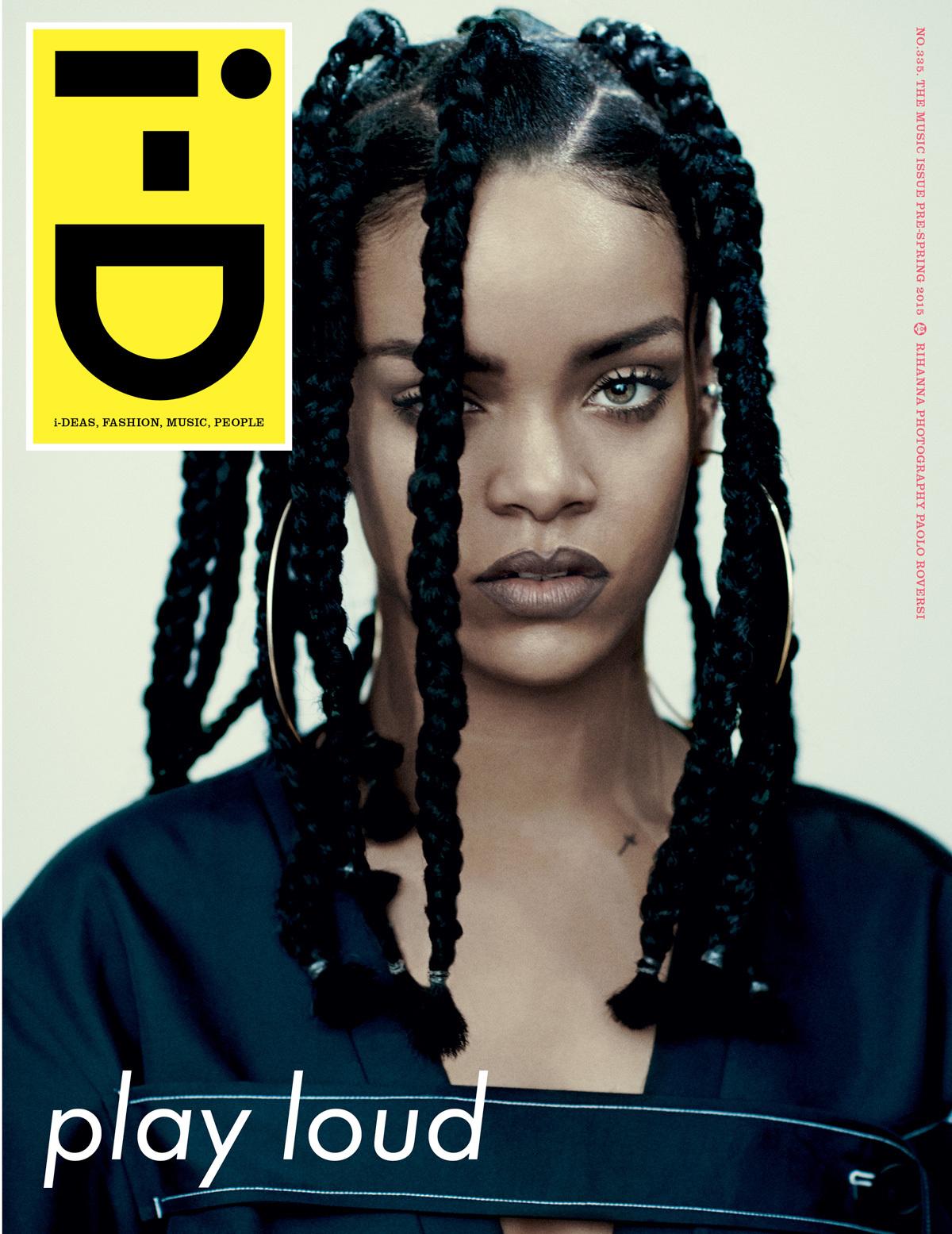
I like these covers because they are quirky and incorporate bright and contrasting colours, some of which seem almost unordinary, fitting in with the 'alternative' theme, and use striking images or backgrounds which attract the reader's attention. A range of different fonts have been used which I think fit in with my chosen genre, and the amount of text on the pages differ, which will allow me to play around when creating my own magazine, as I can base my cover on any of these designs. I particularly like the M.I.A. cover of Clash magazine and will possibly choose a font along these lines and maybe a plain yet striking background of a similar style. I like the unique layout and placement of text used on both of the other Clash covers. The background image of the Fader covers are very artistic and colourful and gives the magazine a 'feminine' look about it, as well as its bubbly choice of fonts. i-D magazine also gives off a similar aspect towards the imagery and the fonts, therefore I believe a combination of all three of these magazines would work well when it comes to creating my own alternative magazine.
This colour palette contains a mixture of stereotypical male and female colour schemes. Whilst one would think these colours should clash and look slightly odd next to each other, the cover of Clash featuring the artist Lana Del Rey proves otherwise, as it provides a dark, but also neutral aspect towards the overall image, increasing its potential attention to attract people's eye line as they walk past this magazine in the store.
This colour palette contains a mixture of light and dark colour schemes. Whilst one would think these colours should clash and look slightly odd next to each other due to their unnatural pairing, the cover of Clash featuring the artist DJ Shadow proves otherwise, as it provides a unique and stylish aspect towards the overall image, increasing its potential attention to attract people's eye line as they walk past this magazine in the store.
This colour palette contains a mixture of stereotypical male and female colour schemes. Whilst one would think these colours should clash and look slightly odd next to each other, the cover of Clash featuring the artist M.I.A. proves otherwise, as it provides a noisy aspect towards the overall image, increasing its potential attention to attract people's eye line as they walk past this magazine in the store.
This colour palette contains colder, more neutral tones within the different browns and greys. Whilst one would think these colours should appear rather dull and unappealing, the cover of Clash featuring the artist Matty Healy from The 1975 proves otherwise, as it creates stronger emphasis of the artist and his facial features, increasing its potential attention to attract people's eye line as they walk past this magazine in the store if they so happen to like the artist, or potentially find him attractive.
This colour palette contains tones which connotate with nature and the outdoors, within the different greens. This would attract a male audience typically as green is conventionally associated with men, and the use of the artist Earl Sweatshirt proves this to be aimed more at a male audience as well, as his overall audience appears to be portrayed as dominantly males.
This colour palette contains a mixture of both cold/neutral tones with the use of browns, alongside warm tones with the use of blues. This colour scheme provides a calm feeling towards the magazine cover, and this is also emphasised with the relaxed looking featured artist Mac Miller. I believe this would appeal to both a male and female audience, due to the use of both muted and bright colours.
The use of dark, muted tones within this cover creates a mysteriously intriguing personality towards the magazine. The different shades of green blend with the mixture of greys and blacks, creating dark connotations as a whole. This colour scheme would work well with a female audience due to the use of the cover artist Banks, alongside a male audience due to the masculine greens that are used.
This colour palette contains a mixture of both cold/neutral tones with the use of greys and blacks, alongside warmer tones with the use of blues. This colour scheme provides a thrilling feeling towards the magazine cover, and this is also emphasised with the black and white photo of featured artist Metronomy. I believe this would appeal to both a male and female audience, due to the use of both muted and brighter colours.
This colour palette contains tones which connotate with nature and the outdoors, within the different greens and browns. This would attract a male audience typically as both green and brown are conventionally associated with men, and the use of the artist Tyler The Creator proves this to be aimed more at a male audience as well, as his overall audience appears to be portrayed as dominantly males.
This colour palette contains tones which connotate with both darkness and femininity, within the different pinks and blacks. This would attract a male and female audience typically as black is conventionally associated with both genders, and pink is associated with females. The use of the artist Woodkid proves this to be aimed more at a male audience as well, as his overall audience appears to be portrayed as dominantly males.
Clash is a popular music and fashion magazine and website based in the United Kingdom. It is published 10 times a year by Music Republic Ltd. after Clash Music Ltd went into liquidation. The brand's content alternates between modern bands such as The Horrors, Florence & The Machine and Jamie xx as well as hip-hop artists like DJ Shadow, Kanye West and Beastie Boys, who have all had cover spots in recent issues. It concentrates on music and fashion, and often their effect on surrounding culture, as well as film and technology.
i-D
i-D is a British magazine dedicated to fashion, music, art and youth culture. i-D was founded by designer and former Vogue art director Terry Jones in 1980.The first issue was published in the form of a hand-stapled fanzine with text produced on a typewriter. Over the years the magazine evolved into a mature glossy but it has kept street style and youth culture central. The magazine is known for its innovative photography and typography and as a training ground for fresh talent. Photographers Wolfgang Tillmans, Mario Testino, Terry Richardson, Craig McDean, Nick Knight and Juergen Teller started their careers at i-D, as did Dylan Jones and Caryn Franklin. Other photographers that have contributed to i-D include Ellen von Unwerth and Kayt Jones. People who have appeared in i-D include Madonna, John Galliano, Alexander McQueen, Kanye West, Helmut Lang, Franz Ferdinand, Chloë Sevigny, Raf Simons, Undercover, Veronique Branquinho, Lily Cole, Giles Deacon, Dizzee Rascal, Scarlett Johansson, Rick Owens, Selena Gomez , Rihanna, Pedro and Liv Fontaine.
VIBE
Vibe is a music and entertainment magazine founded by producer Quincy Jones. The publication predominantly features R&B and hip-hop music artists, actors and other entertainers. After shutting down production in Summer 2009, Vibe was purchased by the private equity investment fund InterMedia Partners and is now issued semi-monthly with double covers, with a larger online presence. The magazine's target demographic is predominantly young, urban followers of hip-hop culture. In 2014, the magazine moved online-only. The magazine owed its success to featuring a broader range of interests than its closest competitors The Source and XXL which focus more narrowly on rap music, or the rock and pop-centric Rolling Stone and Spin. As of June 30, 2012, Vibe has a circulation of 300,943, of which 202,439 was paid, and 98,504 was non-paid.
NME
New Musical Express (NME) is a British music journalism magazine published since 1949. It is largely associated with rock, alternative and indie music. It was the first British paper to include a singles chart, in the edition of 14 November 1952. In the 1970s it became the best-selling British music newspaper. During the period 1972 to 1976, it was particularly associated with gonzo journalism (self-involved reporting), then became closely associated with punk rock through the writings of Julie Burchill, Paul Morley and Tony Parsons. It started as a music newspaper, and gradually moved toward a magazine format during the 1980s and 1990s, changing from newsprint in 1998. An online version of NME, NME.com, was launched in 1996. It became the world's biggest standalone music site, with over seven million users per month.[citation needed] The magazine's paid circulation in the first half of 2014 was 15,830, and has been in long-term decline. Due to continuing poor sales, the magazine became a free publication in September 2015
Rolling Stone
Rolling Stone is a biweekly magazine that focuses on popular culture. It was founded in San Francisco in 1967 by Jann Wenner, who is still the magazine's publisher, and music critic Ralph J. Gleason. It was first known for its musical coverage and for political reporting by Hunter S. Thompson. In the 1990s, the magazine shifted focus to a younger readership interested in youth-oriented television shows, film actors, and popular music. In recent years, it has resumed its traditional mix of content.
The Fader
The FADER is a New York-based music magazine launched in 1999 by Rob Stone and Jon Cohen. The FADER documents a range of emerging music, style and culture.The FADER was the first print publication to be released on iTunes. It has been credited with giving exposure to top artists ahead of mainstream recognition, including Kanye West, Bon Iver, The Strokes, Drake and The White Stripes
I want to create my magazine based upon the influences of Clash Magazine, as I believe they portray the alternative genre the best out of the rest of the alternative style magazines.
Lana Del Rey - Clash Interview
California has a very direct and unforgiving steam beer called Anchor. But in Hollywood nobody drinks Anchor, because they prefer fresh peach Bellinis. Since arriving here three days ago, every part-time actor I’ve met drinking these Bellinis, alone in the Chateau Marmont, says this feeling of dreamy detachment I’m experiencing is a spell well known to marinate your mind’s eye after a few days on the West Coast. I suppose you could call it ‘Californication’. All around, I see the smoked glass freeze-frame of a film I once caught. The sidewalks of Billy Wilder’s Sunset Boulevard, Johnny Utah punching surfers on Leo Carrillo State Beach, or Billy Hoyle in White Men Can’t Jump arriving to play basketball on Windward Avenue in a ’60s Cutlass Convertible. This must be what turned David Hockney of ballsy British portraiture into David Hockney of paradise poolsides and burnt sienna buildings. It’s like the very geography of Los Angeles strokes you into a coma of ignorant bliss and subdued optimism, where the future always looks good because you’ve stopped paying any attention to the past. Anchor tastes like the world you’ve got, and those Bellinis like the world you want. But you can’t drink Bellinis forever. Lana Del Rey isn’t from LA – she was born Elizabeth Grant in New York in the summer of 1986 – but her new album, ‘Ultraviolence’, is what she calls “California driven”. “I like the idea of talking about it more and more and living here more and more, and falling into a real life here by the ocean. There is definitely an over-arching theme of finding a home and being on the West Coast.”
"It was never about the music for (the press). My public story is more a story about journalism..."
She’s on her backyard patio when I arrive, and as I take a seat she slopes on a recliner, bathed under the sun’s first blush. I tell her about the theme of our forthcoming magazine, the American Dream, and she laughs: “I am definitely chasing my own little American Dream.” She’s still carrying the glow of a heavenly Coachella performance just 48 hours earlier. Standing in the crowd for that show, I saw things I didn’t expect. In a tangerine dress patterned with night-fire hibiscus, she pattered barefoot around the stage – resembling a real-life Holly Golightly – delivering tracks like ‘Body Electric’, ‘Blue Jeans’ and ‘Ride’ at a trance-inducing pace. But, around me, people weren’t simply soaking it in. They were really letting it out: cathartically embracing the angelic poet for every line she had, responding with tears, disbelief, weird expressions of joy, and frantic attempts to touch her as she passed by. “She didn’t really tour America for the last album,” explains Lana’s father, who I strike up a conversation with after we realise our shared affinity for tasteless (by which I mean killer) Hawaiian shirts. “This is the first time they’ve seen her live. They want to touch her. It’s like they didn’t believe she really existed.” I’d hazard a guess that the stateside critical reception Lana received after her breakthrough (second) album, 2012’s ‘Born To Die’, played a role in her choice not to tour America until now. While Europe generally embraced the record, a less-favourable gust blew from many publications across the Atlantic. It was a strange and personal one that often eschewed musical assessment in favour of troll-ish, chauvinistic rambles that boiled quite redundantly down to the size of her lips, how she’d changed her hair, and that she used to call herself Lizzy Grant. I’ll admit, while observing this backlash with disdain, there was a small and shameful slither of excitement and curiosity within me, which relished the fracas. I wanted to know how someone could garner so much hate and praise in equal measure. A split-second of reticence diminishes, before Lana willingly reflects.
'Ultraviolence', from the album 'Ultraviolence' - - -
“It was never about the music for them. My public story is more a story about journalism; like a commentary on how modern-day journalism works. None of the stuff is ever really about me, because I didn’t even give that many interviews. Most of the stuff written was unsolicited or creative writing, and a lot of it was just wrong. I mean, there were pictures that had been f*cked with to look different. It was very weird.” I can tell pretty quickly that though she may have risen above such clawing, some scars still remain. “When nobody has ever written about you before, you are interested in what they have to say. You hope it’s good. When it isn’t and you keep going anyway, you have to not care. You can’t.” It’s no surprise that, through all this, Lana has become a darling of American culture. After all if you’re loved, then your lovers will celebrate you, but only when you’re loved and hated in equal measure will you get the whole world talking. The question is: at what cost? I ask her if she ever considered giving up on music. “Every day,” she admits. “I didn’t want to do it, ever. You can make music just for making music. You don’t have to put it on YouTube, and that was definitely a viable option for me. I have a lot of passions and making music was always something I would do for fun. However, from what happened, it wasn’t worth it most of the time.” It is interesting to consider the symbolism of Lana’s new album title, ‘Ultraviolence’, which is taken from A Clockwork Orange by Anthony Burgess. In the Stanley Kubrick screen adaptation of that film, music is salvation for the deeply troubled protagonist Alex. In spite of the pain, horror and “ultraviolence” around him, music is the only true passion that can relieve him and guide him to euphoria. However, it is music that ultimately leads to his demise. “It’s still not really worth all the bullshit,” continues Lana. “Being able to tell my story through music is totally amazing, but that is where it begins and ends.” She flashes a smile, and if there was any bitterness in there, she’s smothered it with a dominant expression of dignity. “I don’t care now, because I can’t. I already know what’s coming. It’s gonna be disastrous on some level, in some way.” Lana might feel like she stares down a barrel of inevitable adversity, but her new album carries no sign of apprehension. ‘Born To Die’, and its eight-track ‘Paradise’ extension, was a luxurious and impressive record, a real fresh peach Bellini, enriched in ’50s and ’60s Americana, with the grandiose string sections, the beehive hairdo, and the fallen angel narrative. But it was clearly a record that had been through the tinkering mills. Shaken, stirred and thoroughly mixed.
I had been saying that I needed the fuzz and the fire. When I met Dan (Auerbach), he was like, ‘Well, I’m pretty known for the fuzz’... - - -
Conversely, ‘Ultraviolence’ – released on June 16th – is a rugged beast, an unforgiving and direct steam beer, made with a band, in a room. The earnest, lo-fi approach smacks of Lana’s almost-eponymous 2010 debut album, (swapping vowels to be titled ‘Lana Del Ray’) but with a much beefier mass of modified guitars and irregular harmonic collisions. Pop, jazz, rock and a lineage of classic records colour its influences: Eagles’ ‘Hotel California’, The Turtles’ ‘Happy Together’, The Byrds’ ‘Young Than Yesterday’. It’s clear that her producer, The Black Keys’ blues-rock maverick Dan Auerbach, was the boiling water on this psychedelic souchong. “I didn’t know a lot about Dan or his records when I first met him,” divulges Lana. “For instance, I didn’t know that the word he loved to use was ‘fuzz’. For an age, I had been saying that I needed the fuzz and the fire. When we met, he was like, ‘Well, I’m pretty known for the fuzz.’ So I knew: ‘Cool! You’re my man!’” Before Dan, there was December (New York, 2013, cold). Lana decided she was ready to take what she’d been working on into a studio. That decision eventually resulted in a twist of fate that would ultimately ignite ‘Ultraviolence’. “I went to Electric Lady Studios down in the East Village for a while,” she explains. “My friend runs it now, so he let me have the whole place to myself for five weeks. I produced everything myself with my guitar player and then we hired a session drummer. We had made this kind of classic rock-inspired record – 11 tracks. So, I thought I was done.” She laughs. “And then, on the last night, I met Dan. We went out to a club, we looked at each other and we were like, ‘Maybe we should do this together?’ It was rare for me, because it was really spontaneous. Five days later, I flew to Nashville and played all our tracks to Dan. We had been talking about this ‘tropiCali’ vibe, about how I loved LA, and that it was grounding me. I felt like the energy in LA was really sexy. But being there also enhanced my love for the East Coast, in being away from it. We really had this West Coast sound in mind, but with an East Coast flavour. And then we recorded it in the middle of the country. It was an American amalgamation.” With an album inspired by the East and West, and made in the middle, would it be fair to assume that America is Lana Del Rey’s ultimate creative muse? “It definitely was. I was trying to get my loving feeling back for New York, because a lot of shit went wrong there. I had a real aromatic inclination there, alone for years, wandering the streets, feeling free and unhinged. I didn’t feel free once things got bigger. I lost that feeling. So, coming back West and working with a stranger like Dan made me feel more alive and more in touch with America.”
'West Coast', from the album 'Ultraviolence' (Read about the making of this video here) - - -
I ask Lana about her choice of John Wayne, Marilyn Monroe and Elvis as heavenly spirits in the Garden of Eden for her short film, Tropico. “I wrote a little monologue for everyone who came to the premiere of Tropico. When I was studying philosophy my teacher told me that it’s okay to feel like the people you’re closest to aren’t alive anymore. Sometimes that is the best company to keep. It’s about the people that pondered the same questions as you did, and had the same sort of life mentality as you. I was upset and inspired by that premise. “I knew then, really, that my closest friends would be people I have never really met before. I was different and I didn’t know many people who felt about mortality how I did. As a result, I do feel a personal connection with the icons: John Wayne, Elvis. I loved how nice Marilyn was, I related to her. Finding girls who were as loving and warm as her is hard.” Like Lana, Marilyn Monroe wasn’t one without her detractors. “Success makes so many people hate you,” she once said, “I wish it wasn’t that way.” Similarly, some still see Del Rey’s femme fatale aura as a commercial angle aimed purely to incite lust and sell, sell and sell again. “Forget about singing,” begins a recent live review in The Chicago Tribune, “Lana Del Rey could’ve passed for a swimsuit model posing for paparazzi cameras on Friday at a sold-out Aragon”, epitomising how, to many, her enchantment will always be superficial. But for more avid fans, her allure is artistically cavernous. Just like Vladimir Nabokov’s Lolita, Truman Capote’s Holly Golightly, Charles Vidor’s Gilda, or even the original Carmen, yes, there is a surface of seduction – but beyond that image, there is deep play in action. Lana personifies a struggle between stability and freedom; she conveys expressions of escapism, a scramble for courage in the face of fatalism, a subconscious need to confess, a desire for power. This is no swimsuit competition. This expressive storyteller springs from the darkness for the new album track ‘Money Power Glory’. It might have textured guitars and a rock soundscape, but – with a trudging beat, and bass so deep even Adele wouldn’t roll in it – this track is essentially gold-digger dub. Lana opens with her trademark rap drawl, before peaking with some soaring vocals, a good octave higher than the smoky and languorous alto depths she’s known for. “I want money and all your power and all your glory,” chimes the lyrical Medusa, “I’m going to take you for all you’ve got.” This mood continues into ‘Sad Girl’, which might not be her most explosive or infectious song, but these lyrics are expertly vivid, and a disturbing and sadistic love song is spun into a cinematic plot. “Being a mistress might not appeal to fools like you,” she derides, “but you haven’t seen my man.” The line typifies this track’s motif: that despite the best intentions of the onlooker, sometimes people don’t want to be saved. All this Mary Gaitskill-like debased romance is sugar coated with ghostly production and racy Spanish guitar.
"Those inspirations I got when I was 15 are still my only inspirations. It’s one world I dip into to create other worlds..." - - -
‘Shades Of Cool’ rises like a deathly waltz for depressive lovers, and it illustrates this turmoil with a jazz air, slow drums, a stargazing chorus and a helter-skelter middle-eight. I begin to ask Lana what her favourite track is. “(Album opener) ‘Cruel World’,” she decides, before I’ve even finished. “I went down to the beach and I was thinking about everything, personally. The verse is thoughtful and laid back, but then the chorus falls into this world of chaotic and heavy sub-bass. The juxtaposition of those two worlds, the peaceful beginning and the chaotic chorus, it summed up my personal circumstances of everything going easily and then everything being f*cked up. It felt like me.” On this West Coast she so fervently draws from, the one I’m sitting beside right now, even the weather is in on it. In some pact of pathetic fallacy, it stubbornly refuses to rain, ever, and instead bakes the city in a constant beam of delusional ‘everything’s fine’ sunshine. One time, in the throes of jet lag, I did catch it lightly sprinkling at 5.30am, and as I looked down from the 10th floor of my hotel, it felt like the glamorous districts of Bel Air, Beverly Hills and Westwood were recoiling from me like a girl with no make-up on yet, yelling: ‘You weren’t supposed to see me like this!’ Even now, as the idiotic sun burns down onto the patio, I swear I can hear each stone cracking in surrender. Sensing the heat, Lana asks if I want to take a walk, and for some corporeal reason that first movement in an hour – sending chemicals fizzing, blood flow rising and muscles warming – sparks a shift to deeper conversation. “When I was 15, I had this teacher called Gene Campbell, who is still my good friend,” begins Lana. “In boarding school, to become a teacher you don’t have to have a Masters. I was 15 and he was 22, out of Georgetown. He was young, and at school you were allowed to take trips out at the weekends. On our driving trips around the Connecticut counties, he introduced me to Nabokov, (Allen) Ginsberg, (Walt) Whitman, and even Tupac and Biggie. He was my gateway to inspirational culture. Those inspirations I got when I was 15 are still my only inspirations. I draw from that same well. It’s one world I dip into to create other worlds. Like this philosopher Josiah Royce once said: ‘Without the roots, you can’t have any fruits.’” The idea of “sculpting your own world to live in” is a priority to Lana, and it is from this inherited inspiration that she irrigates Planet Del Rey. We find an exaggerated form of this world in the visual art that accompanies her music, just as much as the tracks themselves. She raises a finger that beams to me ‘hold that thought’, and scurries into the house only to return with a large hardback photography book under arm. The cover reads Pulp Art Book, and carries the image of a naked woman wearing a Native Indian warbonnet while lighting a cigarette. “A friend gave this to me as a present, but for some reason they thought the photographer (Neil Krug) was dead,” explains Lana. Krug’s work is bold, and comes across like that of a spaghetti Western surrealist with an eye for finding the artistic merit in ’70s American schlock. This book in particular is a collection of sublime moments captured through ancient Polaroids, which portray kaleidoscopic acid fantasies, B-movie sexploitation/violence, and Middle American subculture. “I was so heavily influenced by it, always thinking he was dead,” says Lana. Fortunately, the information was duff: Neil wasn’t dead. He was alive, well, and managing both very nearby in Los Angeles. It didn’t take too long for the pair to hook up some long-term plans, and his visual impact on ‘Ultraviolence’ has been prominent. “For some reason, he has been really life changing for me,” admits Lana. “He loves painting Polaroids and making little 8x10s. I saw one of the shots he took of me, and I felt it had to be the album cover. That photo influenced me to change the track listing.” - - -
'Shades Of Cool', from the album 'Ultraviolence' - - -
Only yesterday, I watched Neil shoot Lana on a beach location in Malibu for Clash. When the camera stopped, and nobody was adjusting a fringe, summoning a pose or straightening a collar, she paused alone in the ocean, splashing lightly, seizing a tranquil moment while throwing an endless gaze at the Pacific horizon. It reminded me of a line by the Californian writer Joan Didion: “Here, beneath that immense bleached sky, is where we run out of continent.” I ask Lana if she remembers it. “I’m like a little fish,” she proudly declares. “When you get to that water, and you’re not from here, it feels like you’re as far as you can go. You have your feet in the ocean and you’re at the edge of the world.” I ask if her spirituality resides purely with sublime nature, or is there some religion in there? “I got to a point 10 years ago where everything was so wrong in my personal life that I let go and stopped willing my way into life. When I let go of everything and stopped trying to become a singer and write good songs and be happy, things then fell into place. I was surrendering to life on life’s terms. It was this very real experience with a life science that nobody had taught me. You let go of everything you think you want, and focus on everything you love, so it’s the only vibration you’re putting out there.” So, when you cease focusing on your desires, the things you’ve always wanted come naturally to you? “No. It’s feeling like you’re already there; that you are where you wanted to be the whole time. You just have to imaginatively let it already be so.” It’s that idea of decorating reality with elements of fantasy that lines ‘Ultraviolence’: this marriage of an orange-blossomed West Coast dream with bleak and difficult East Coast realism; the idea of seeing the blue pill and the red pill, and choosing to double dunt both. It’s ordering a fresh peach Bellini, and pouring in a can of Anchor. - - - Words: Joe Zadeh Photography: Neil Krug (online) Artistic direction: Rob Meyers ‘Ultraviolence’ is released by Polydor on June 16th, and is reviewed here. Find Lana Del Rey online here. This interview appears in issue 96 of Clash magazine, featuring more exclusive photography. Buy a copy here. Related: listen to Clash's premiere of the ZHU remix of 'West Coast' Buy Clash Magazine Get Clash on your mobile, for free: iPhone / Android
(i-D Magazine Fall 2014. Model: Kati Nescher. Photographer: Christian MacDonald. Fashion Editor: Jacob K. Hair: Tina Outen. Make-up: Petros Petrohilos.)
(i-D MAGAZINE A/W 2011 "Follow Your Dreams Not Someone Else´s". Photography Josh Olins. Styling Cathy Kasterine. Models Alex Poots, Harry Wooler, Jerome Rebeiro, Karl Morrall, Lukas Grout.)
Clash Magazine
(Cover shoot of Rita Ora)
(Cover shoot of FKA Twigs)
(Cover shoot of Lana Del Rey)
(CLASH MAGAZINE: CHARLOTTE CAREY BY PHOTOGRAPHER JEFF HAHN)
(Photographer Gareth Rhys. Topman Designer collabo (Topman X James Long) for Clash Magazine.)
Wonderland Magazine
(Cover shoot of Taylor Swift)
(Cover shoot of Selena Gomez)
(Cover shoot of FKA Twigs)
(GIRL IN PROGRESS | ANAIS POULIOT | WONDERLAND MAGAZINE | STYLING BY JULIA SARR-JAMOIS)
(Bella Hadid for Wonderland Magazine, The Spring Fashion Issue 2015Photographed by: Ben Rayner)